Options
European trade-union strategies: Between technocratic efficiency and democratic legitimacy
Author(s)
Date Issued
2006-10
Date Available
2012-11-28T12:32:08Z
Abstract
The democratic nature of the EU, or the lack of it, has never been so important
(Schmitter 2000; Erne et. al. 1995). It is generally acknowledged that the existing
governance structures and mechanism of the EU “are not able to provide democratic
legitimation for the EU polity as a whole” (Héritier 1999: 208; European Commission
2003a: 38). Indeed, a democratic polis needs as well as constitutional bodies, a tight
network of intermediate institutions and social organisations such as the unions, other
civil society associations and the media (Lepsius 1993). These offer more possibilities
for citizens’ participation in the political system and thus an increase in its legitimacy.
Hence, the making and performance of European civil society organisations is linked to
the constitution of a democratic EU polity. This chapter analyses one potential agent of Euro-democratisation, namely organized labour. Although unions have often played an important role in national democratisation processes, this does not necessarily promise a similar role for them at the EU level. Authoritarian regimes typically prohibit free trade-union activity and consequently impel unions to take part in democratisation movements, but the current institutional setting of the EU provides alternative options for organized labour, namely Eurodemocratisation, Euro-technocracy and (re-) nationalisation. I will assess the tensions between these options in a comparison of the different strategies of trade unions in two transnational company merger cases.1 While the unions and European Works Councils involved seem to have adopted a Euro-democratic strategy in the ABB-Alstom merger case, they apparently pursued a Euro-technocratic strategy in the parallel Alcan-Pechiney-Algroup case. The adoption of different strategies seems surprising since it was the same European, German and French unions that played a decisive role in both cases. This indicates that unions have a range of options, something which leads one to reject any kind of determinism regarding the role of civil society organisations in the EU integration process.
(Schmitter 2000; Erne et. al. 1995). It is generally acknowledged that the existing
governance structures and mechanism of the EU “are not able to provide democratic
legitimation for the EU polity as a whole” (Héritier 1999: 208; European Commission
2003a: 38). Indeed, a democratic polis needs as well as constitutional bodies, a tight
network of intermediate institutions and social organisations such as the unions, other
civil society associations and the media (Lepsius 1993). These offer more possibilities
for citizens’ participation in the political system and thus an increase in its legitimacy.
Hence, the making and performance of European civil society organisations is linked to
the constitution of a democratic EU polity. This chapter analyses one potential agent of Euro-democratisation, namely organized labour. Although unions have often played an important role in national democratisation processes, this does not necessarily promise a similar role for them at the EU level. Authoritarian regimes typically prohibit free trade-union activity and consequently impel unions to take part in democratisation movements, but the current institutional setting of the EU provides alternative options for organized labour, namely Eurodemocratisation, Euro-technocracy and (re-) nationalisation. I will assess the tensions between these options in a comparison of the different strategies of trade unions in two transnational company merger cases.1 While the unions and European Works Councils involved seem to have adopted a Euro-democratic strategy in the ABB-Alstom merger case, they apparently pursued a Euro-technocratic strategy in the parallel Alcan-Pechiney-Algroup case. The adoption of different strategies seems surprising since it was the same European, German and French unions that played a decisive role in both cases. This indicates that unions have a range of options, something which leads one to reject any kind of determinism regarding the role of civil society organisations in the EU integration process.
Type of Material
Book Chapter
Publisher
Edward Elgar
Copyright (Published Version)
2006 Edward Elgar
Subject – LCSH
Labor unions--European Union countries
Democracy--European Union countries
European Union countries--Politics and government
Language
English
Status of Item
Peer reviewed
Journal
Smismans, S. (eds.). Civil Society and Legitimate European Governance
ISBN
9781843769460
This item is made available under a Creative Commons License
File(s)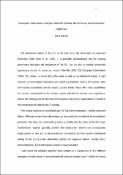
Loading...
Name
j._Erne_FINAL_Smissmans.pdf
Size
220.86 KB
Format
Adobe PDF
Checksum (MD5)
ee6b13d2b9de76b1fe2ce7c61c92e42a
Owning collection