Options
The Hortative Aorist
Author(s)
Date Issued
2018-12
Date Available
2026-01-13T16:34:21Z
Abstract
The final section on the aorist indicative in Goodwin's Moods and Tenses identifies the following usage: ‘In questions with τί οὐ [‘why not’], expressing surprise that something is not already done, and implying an exhortation to do it’. Other scholars identify urgency or impatience in these questions. Albert Rijksbaron writes: ‘Questions with the 1st or 2nd person of the aorist indicative, introduced by τί οὖν οὐ or τί οὐ, often serve, especially in Plato and Xenophon, as urgent requests [original emphasis] … The aorist indicative is more emphatic than the present: the speaker observes that a state of affairs which he apparently wants to occur has, in fact, not occurred, and he asks his interlocutor why it has not.’ Kühner and Gerth explain it as follows: ‘Der Redende wünscht in seiner Ungeduld gewissermassen die begehrte Handlung als eine schon geschehene zu sehen’ (‘the speaker impatiently wants, as it were, to see the desired action as one that has already been done’). They contrast allegedly less urgent examples in the present (‘der Ton der Frage ist alsdann ruhiger’, ‘the tone of the question is thereby milder’). These scholars stress the pastness of the aorist tense in communicating urgency and impatience: ‘Why have you not …?’. This remains the dominant view, regularly repeated in commentaries.
Type of Material
Journal Article
Publisher
Cambridge University Press
Journal
The Classical Quarterly
Volume
68
Issue
2
Start Page
415
End Page
424
Copyright (Published Version)
2019 The Classical Association
Language
English
Status of Item
Peer reviewed
ISSN
0009-8388
This item is made available under a Creative Commons License
File(s)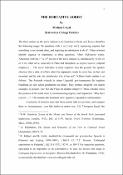
Loading...
Name
the_hortative_aorist.pdf
Size
267.3 KB
Format
Adobe PDF
Checksum (MD5)
65817dd8aee9a8c25c6eaf6495927bce
Owning collection